You might be earning well, staying on top of responsibilities, and still feel uneasy when it comes to money.
That quiet stress? It adds up. It affects how you #plan, how you spend #money, and how much peace you carry into each day.
What I once dismissed as “normal” turned out to be signs I shouldn’t have ignored. I started recognizing patterns, ones that many #professionals experience but rarely talk about.
Not having enough is one thing. But not feeling in control of what you have? That’s a different kind of pressure.
If any of this feels familiar, now is a good time to pause and check in with yourself.
I’ve put together a guide that breaks this down with real stories, simple frameworks, and clear steps because #financialwellbeing should feel achievable, not overwhelming.
Why do so many professionals earn well but still feel anxious about #money by the end of each month?
I asked myself this question not once, but repeatedly while treating patients, managing hospital teams, and even reflecting on my own life. The more I looked around, the more I noticed a pattern: steady incomes, strong degrees, and yet a persistent sense of #financialstress.
That question became the starting point for something much bigger.
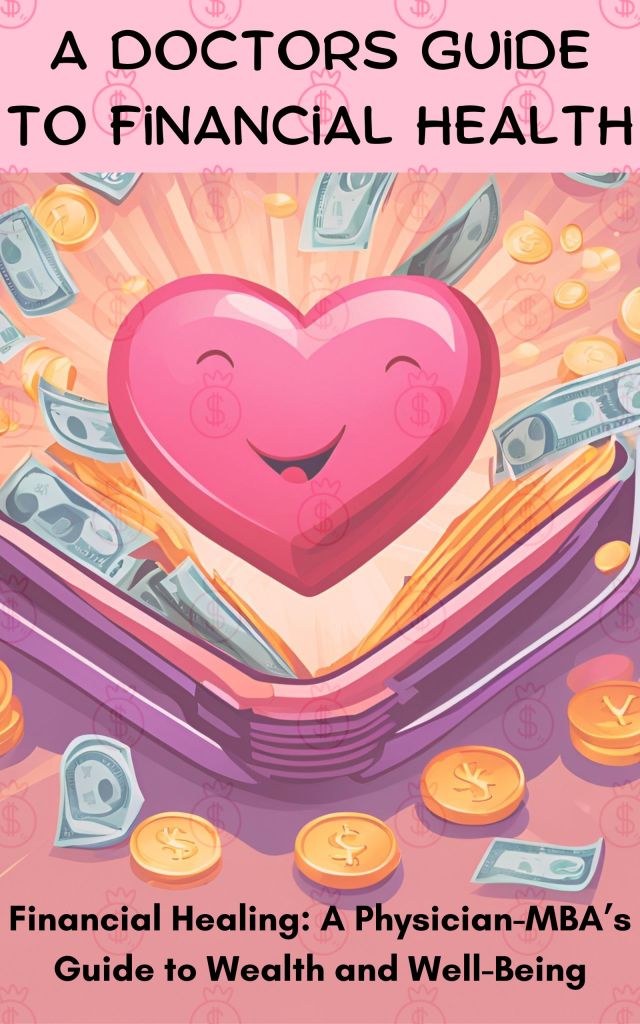
Today, I’m deeply grateful (and a little nervous!) to share something close to my heart, A Doctor’s Guide to Financial Health is now out in the world.
This book is for professionals and families who have done all the “right” things—education, careers, responsibilities, but still find themselves unsure about money, caught in #EMI loops, or simply exhausted by the constant worry of making ends meet.
As a doctor and hospital administrator, I’ve seen how financial stress quietly impacts mental and physical health. This book blends personal experiences, real-life examples, and simple strategies to help you:
✔️ Diagnose the hidden signs of financial stress
✔️ Build a #budgetingsystem that doesn’t feel restrictive
✔️ Understand debt, compounding, and how to plan for financial peace
✔️ Shift your mindset from survival to stability with clarity
It’s not written for finance experts. It’s written for you, the professional who wants peace of mind, without spreadsheets or jargon.
If that sounds like something you or someone you care about needs right now, you can grab your copy..
Let me tell you a little story about my friend—let’s call him Sunny, because he always sees sunshine even when there’s a storm brewing. Now, Sunny’s buzzing with excitement because he’s planning to buy a brand-new Toyota Fortuner. (If you just whispered “that’s fancy,” you’re not alone.)
But here’s the twist: he’s buying it on 100% EMI. The whole thing is riding on a business plan—he’ll give the car to a rental company, use that income to pay off the loan, and voilà—a car that pays for itself and adds a little extra income on the side. Genius, right?
Well… maybe not.
On paper, this plan looks flawless. The numbers line up, the projections are neat, and the Excel sheet even has some green boxes that scream profit. But here’s where Butter (me) raises an eyebrow. Not because I don’t want my friend to win big—but because I’ve seen what happens when the math works perfectly, but life… doesn’t.
Let’s talk about the real stuff—the tricky, often-ignored side of financial risk that no calculator or confident salesman can prepare us for.
1. The Pandemic Problem: When the World Presses Pause
Remember 2020? Yeah, how can we forget. Car rental businesses crashed, travel halted, and people clung to every rupee. If Sunny had owned that Fortuner back then, his grand rental plan would’ve sunk faster than my willpower near a plate of hot gulab jamun.
Business models that only work in ideal conditions are fragile. If a single unexpected event (hello, global pandemic, or even just a bad tourist season) can derail your whole plan, then the plan isn’t as solid as you think.
2. Cash Flow Is Not Always a Flow
Here’s the truth: most small businesses—even established ones—don’t have consistent income every single month. Some months are brilliant, others barely break even. Rental businesses are no exception. Delays in payments, off-season slumps, car maintenance, minor accidents (because hello, Indian roads)—they all eat into that income Sunny’s depending on.
And guess what? The bank doesn’t care. That EMI is due on the same day, every month, rain or shine, festive season or flu season.
3. What’s Plan B? No, Seriously. What Is It?
This is the part that really worries me: if the rental business flops or just dips for a few months, Sunny doesn’t have enough salary to cover that EMI. Which means he’s betting the house (or, okay, the car) on one income stream that isn’t guaranteed. That’s not investing—that’s gambling with seatbelts on.
Every good financial plan needs a backup. Whether that’s savings, a side hustle, family support, or just plain caution—Plan A should never be the only plan.
4. The Emotional Toll of “Stuck” Decisions
Let’s say things do go south. Now what? Sunny’s stuck paying for a car he can’t afford and can’t sell without a loss. That kind of pressure eats you up. Financial stress has a sneaky way of draining your mental health, straining relationships, and making every decision feel like it’s weighed down with guilt and fear.
And honestly? No “passive income” is worth losing your peace of mind.
5. Why We Romanticize Risk (and Why That’s Dangerous)
I get it. We all want to grow. Earn more. Be financially independent. And sometimes, big risks lead to big rewards. But there’s a dangerous glamorization of risk these days—especially the kind that involves “no investment, high return” or “let the asset pay for itself” dreams.
Real financial growth is steady, informed, and comes with safety nets. Not just hopeful spreadsheets.
So What’s the Lesson Here?
If you’re planning a big financial move—whether it’s buying a car, starting a business, or taking a loan—ask yourself:
What happens if this income stream disappears for 3 months? Can I still sleep at night if this plan doesn’t work? Is there a Plan B, C, and possibly D? Am I mistaking optimism for preparation?
The goal isn’t to kill your dreams. It’s to protect them.
And Sunny, if you’re reading this: I love you, buddy. I’m rooting for you. But please don’t let a shiny new SUV turn into a heavy financial burden. Make sure the sunshine you see isn’t just a glare off a risky plan.
Love,
Butter
P.S. —have you ever taken a financial risk that felt solid but ended up a mess? Or maybe one that paid off in ways you never expected? Tell me everything in the comments. Let’s talk money, mistakes, and what we wish someone had told us sooner.
There’s something magical about an Indian jewelry store—you walk in with a plan and walk out with a loan.
Mom and I had a perfectly reasonable strategy: exchange some old gold, use our gold scheme amount, and upgrade a few pieces—without spending extra. Sensible, right? Except, somewhere between “just looking” and “bill please,” we ended up with a 10-lakh temple jewelry set and a financial hangover.
Step 1: The “Casual” Entry
We walked in, all confident, like seasoned gold investors. But Indian jewelry stores have a sixth sense for weak targets. The moment you step in, they analyze your worth—are you here for a budget ring or a shaadi ka haar? Are you window shopping, or will you be funding their Diwali bonus?
Initially, they handed us the “middle-class tray”—dainty rings, thin bangles, delicate chains. But my mother, unimpressed, gave The Look—the one that silently says, Beta, show me the real stuff. And boom, out came the exclusive, one-piece-only, celebrity-worn, designer collection.
Step 2: Bangles, Rings & Other “Essentials”
You enter thinking you need one thing, but suddenly:
• “Oh, but this matching ring is so elegant!” (Unplanned expense: ₹50,000)
• “You can’t wear a new chain without matching bangles!” (Unplanned expense: ₹1,20,000)
• “Look at these tiny, delicate diamond studs. Just ₹85,000! Peanuts, right?”
At this point, Mom transformed into a financial philosopher. “See, beta, gold is an investment. If we don’t buy it today, prices will increase tomorrow.”
Translation: Let’s just burn all logic and buy everything.
Step 3: The 30% Making Charges & the Great Bargain Scam
Jewelry making charges are the greatest heist in Indian history—no thief has ever looted people more elegantly than jewelry stores.
Salesman: “Madam, only 30% making charges on this.”
Mom: “Only?”
Salesman (smiling sympathetically): “It’s handcrafted, madam. So much effort goes into it.”
Mom: “Give some discount.”
Salesman: (disappears for Fake Manager Discussion) “Okay, madam, just for you, 5% off.”
Ah yes, the VIP treatment that somehow applies to everyone.
Step 4: The Temple Jewelry Trap
Just when we were about to escape, we saw it—a grand temple jewelry set, fit for a goddess. Heavy gold, intricate carvings, and an aura that screamed, Buy me now, regret later.
Me: “Mom, just trying it won’t hurt.”
Mom: “Of course, just trying.”
Two minutes later, she was admiring herself in the mirror, adjusting the necklace like a queen in a historical drama.
Salesman: “Madam, this is our MOST exclusive set. Only ONE in the city.”
BAM. Sold.
Step 5: The Exit—With A Side of Guilt & VIP Treatment
Final bill: ₹10,00,000.
Final emotions: Happiness, horror, regret, pride—ALL AT ONCE.
As we left, suddenly, we were VIPs.
• “Madam, please sit, have chai, coffee, juice?”
• “Please take our membership card, special discount next time!”
• “Madam, a free silver coin for you!”
Ah, yes. They drained our bank account but gifted us a ₹500 silver coin.
Moral of the Story?
You don’t buy gold.
Gold buys you.
And no matter what, you WILL spend more than you planned.
A bear market, typically defined as a decline of 20% or more from recent highs in stock prices, can be a daunting experience for investors. Characterized by widespread pessimism, declining asset values, and economic uncertainty, bear markets test the resilience and discipline of even the most seasoned investors. However, with the right mindset and strategies, investors can not only survive but also position themselves to thrive when the market eventually recovers. Here’s a comprehensive guide on how to navigate a bear market.
1. Understand the Nature of Bear Markets
Bear markets are a natural part of the economic cycle. They are often triggered by factors such as economic recessions, geopolitical tensions, rising interest rates, or overvalued markets. Historically, bear markets have been shorter in duration than bull markets, with an average length of about 9.6 months, compared to the average bull market duration of 2.7 years. Understanding that bear markets are temporary can help investors maintain perspective and avoid panic-driven decisions.
2. Avoid Emotional Decision-Making
Fear and uncertainty are hallmarks of bear markets, and emotional reactions can lead to costly mistakes, such as selling investments at a loss or abandoning a long-term strategy. To combat this:
Stay disciplined: Stick to your investment plan and avoid making impulsive decisions based on short-term market movements.
Focus on the long term: Remember that markets have historically recovered and gone on to reach new highs.
Limit exposure to negative news: Constant exposure to pessimistic headlines can amplify fear. Stay informed but avoid overconsumption of media.
3. Reassess Your Portfolio
A bear market is an opportune time to review and rebalance your portfolio:
Diversify: Ensure your portfolio is well-diversified across asset classes, sectors, and geographies to reduce risk.
Rebalance: Sell overperforming assets and buy underperforming ones to maintain your target asset allocation.
Quality over quantity: Focus on high-quality investments with strong fundamentals, such as companies with solid balance sheets, competitive advantages, and reliable cash flows.
4. Consider Defensive Investments
During a bear market, defensive sectors and asset classes tend to outperform. These include:
Consumer staples: Companies that provide essential goods and services, such as food and healthcare, are less sensitive to economic downturns.
Utilities: Utility companies often perform well during market declines due to their stable earnings and dividends.
Bonds: Fixed-income investments, particularly government bonds, can provide stability and income during volatile periods.
5. Take Advantage of Dollar-Cost Averaging
Dollar-cost averaging (DCA) involves investing a fixed amount of money at regular intervals, regardless of market conditions. This strategy can be particularly effective during a bear market because:
It reduces the impact of market timing.
It allows investors to buy more shares when prices are low, lowering the average cost per share over time.
6. Look for Opportunities
Bear markets can present unique opportunities for savvy investors:
Bargain hunting: High-quality stocks may become undervalued, offering attractive entry points for long-term investors.
Dividend yields: As stock prices fall, dividend yields may rise, providing an opportunity to lock in higher income.
Tax-loss harvesting: Selling losing investments to offset capital gains taxes can be a smart strategy, but be mindful of wash-sale rules.
7. Strengthen Your Financial Position
A bear market is a good time to focus on your overall financial health:
Build an emergency fund: Ensure you have enough cash reserves to cover 3-6 months of living expenses.
Reduce debt: Pay down high-interest debt to improve your financial flexibility.
Avoid over-leveraging: Be cautious about taking on new debt or using margin to invest.
8. Stay Educated and Adapt
Market conditions are constantly evolving, and staying informed is crucial:
Learn from history: Study past bear markets to understand how they unfolded and how investors responded.
Seek professional advice: A financial advisor can provide personalized guidance tailored to your goals and risk tolerance.
Adapt your strategy: Be willing to adjust your approach as new information becomes available.
9. Prepare for the Recovery
While it’s impossible to predict the exact bottom of a bear market, history shows that recoveries do occur. To position yourself for the eventual upturn:
Stay invested: Missing out on the early stages of a recovery can significantly impact long-term returns.
Reinvest dividends: Reinvesting dividends during a downturn can accelerate portfolio growth when the market rebounds.
Maintain a positive mindset: Focus on the opportunities ahead rather than the challenges of the present.
10. Remember: Bear Markets Are Temporary
Bear markets, while painful, are a normal part of the investment cycle. They often serve as a reset for overvalued markets and create opportunities for disciplined investors. By staying calm, sticking to your plan, and focusing on the long term, you can navigate a bear market successfully and emerge stronger on the other side.
Final Thoughts Navigating a bear market requires a combination of discipline, patience, and strategic thinking. While it’s natural to feel uneasy during periods of market decline, remember that bear markets are temporary and have always been followed by recoveries. By following the strategies outlined above, you can protect your portfolio, seize opportunities, and set yourself up for long-term success. As the saying goes, “The stock market is a device for transferring money from the impatient to the patient.” Stay patient, stay focused, and keep your eyes on the horizon.
Hey friends! Let’s talk money today. Not the kind you blow on impulse buys (hello, that unnecessary 12th coffee mug), but the kind you grow. The goal? A portfolio that’s more than just numbers—it’s a steady, hardworking teammate helping you live your best life.
If you’re sitting there thinking, “I have no idea where to start,” you’re not alone. I’ve been there, too—trial, error, and some facepalms later, I figured out how to make my money work smarter. Let’s break it down, step-by-step, and I’ll even throw in real-world example portfolios so you can see how this works in action.
What’s a Portfolio, and Why Does It Matter?
Your portfolio is your financial buffet—diverse, balanced, and designed to keep you full (read: secure and growing). A good portfolio protects you from life’s ups and downs, grows steadily over time, and lets you sleep peacefully at night, even when markets go wild.
Crafting Your Dream Portfolio
1. Diversify Like You’re Assembling a Thali
A thali has a bit of everything—dal, sabzi, roti, even a pickle for a kick. Your portfolio needs the same variety to balance risk and growth.
Example: A balanced portfolio for a 30-year-old might look like this:
50% in Mutual Funds (growth and equity funds)
20% in Fixed Deposits or PPF (for stability)
15% in ETFs (low-cost exposure to stocks)
10% in Gold or Sovereign Gold Bonds (to hedge against inflation)
5% in REITs (real estate, without actually buying property)
Why this works: The mutual funds and ETFs push growth, the FDs and PPF add safety, and gold/REITs keep the portfolio stable.
2. Know Your Risk Appetite (a.k.a. Are You the Thrill-Seeker or the Safe Player?)
Your risk tolerance is like your spice tolerance. If you’re young and can handle some financial “heat,” equities and aggressive funds are your best friends. If you’re closer to retirement, think milder, like bonds and fixed deposits.
Example:
For a 25-Year-Old Beginner:
60% in equity mutual funds
20% in PPF or EPF (safe savings with tax benefits)
10% in gold (for stability)
10% in NPS (long-term retirement savings)
For a 50-Year-Old Planning Retirement:
50% in bonds or fixed deposits (stable and safe)
20% in equity funds (for controlled growth)
20% in PPF or NPS (long-term stability)
10% in gold or real estate
3. Compounding: The Magic Money Multiplier
Compounding is when your money earns money, and then that money earns more money. The earlier you start, the bigger the snowball gets.
Example: If you invest ₹5,000 a month in an equity mutual fund with an average return of 12% per year:
In 10 years, you’ll have ₹11.6 lakhs.
In 20 years, that grows to ₹50.6 lakhs.
In 30 years, it balloons to ₹1.76 crore!
Lesson? Time is your best friend, so don’t wait. Start with whatever you can today.
4. Inflation-Proof Your Portfolio
Inflation is the villain that shrinks your money’s value over time. Your ₹100 today might only buy you ₹80 worth of stuff tomorrow. To beat it, invest in growth assets like equities and real estate.
Real-Life Portfolio Examples
Portfolio for the Beginner Investor
60% Equity Mutual Funds (SIPs in large-cap or index funds)
20% PPF (tax benefits and guaranteed returns)
10% Gold ETFs or Sovereign Gold Bonds
10% Liquid Mutual Funds (for emergencies)
Portfolio for the Ambitious Goal Setter (30s to 40s)
50% Equity Mutual Funds (mix of large-cap and mid-cap funds)
25% Bonds or NPS (stable, long-term growth)
10% Gold (to hedge inflation)
10% REITs (real estate exposure without buying property)
5% in an International Fund (to diversify beyond India)
Portfolio for the Cautious Near-Retiree (50s+)
50% Bonds or Fixed Deposits (stability and liquidity)
20% PPF or NPS (long-term safety)
15% Equity Mutual Funds (low-risk funds)
10% Gold (stability)
5% Liquid Funds (for emergencies)
Lessons I Learned (So You Don’t Have To)
Always, ALWAYS have an emergency fund. Life is unpredictable, and you’ll thank yourself when a rainy day comes.
Don’t underestimate the power of small investments. Even ₹1,000 a month can snowball into something significant.
Health insurance isn’t optional. It’s your financial shield in emergencies.
Your Turn to Build Your Financial Future
The journey to financial health starts with one step: action. Whether you’re a beginner or a pro, the key is to start today, even if it’s small. And if you’re feeling overwhelmed, don’t worry—I’ve got your back.
I’ve packed all my tips, lessons, and easy-to-follow strategies into my book A Doctor’s Guide to Financial Health. And it’s now available for just ₹99—because I believe good advice shouldn’t cost a fortune.
So there I was, sitting cross-legged on my living room floor, trying to zen out during a new guided meditation. The candles were lit, the vibes were immaculate, and the calm voice said: “Money is infinite.”
Uh, what now? Infinite, like the refills at Olive Garden? Like Netflix recommendations you’ll never watch? Intrigued, I decided to dive deeper into this idea because, let’s be real, if money is infinite, why does my wallet sometimes feel like a black hole?
The Concept: Money as Energy
Turns out, the “money is infinite” thing isn’t about printing endless Benjamins (sorry, it’s not a get-rich-quick hack). It’s rooted in the idea that money is energy. And like energy, it flows—it comes, it goes, and theoretically, there’s no cap on how much of it can exist in the world. You know, abundance mindset stuff.
The idea challenges the way we’ve been conditioned to think about money: that it’s scarce, hard to earn, and always running out. Instead, it’s about seeing money as a limitless resource that expands when we focus on creating value, sharing generously, and believing we deserve it.
But let’s pause for a moment—because this all sounds lovely in theory. Yet, as someone who’s googled “how to make pasta from scratch with $3 in my bank account,” I know believing in infinite money takes a little mental gymnastics.
My Research Rabbit Hole
When I started researching, I kept coming across people who claimed that shifting their mindset was the key to unlocking financial abundance. Instead of thinking, “I can’t afford that,” they asked, “How can I afford that?” Instead of stressing about bills, they practiced gratitude for what they already had.
And honestly? It makes sense. Ever notice how focusing on what you don’t have just makes you feel worse? But when you start seeing opportunities instead of roadblocks, life feels a little more manageable. It’s like that time I realized my avocado toast addiction wasn’t the reason I couldn’t buy a house—but maybe cutting back on random Amazon purchases could help.
The Funny Side of Infinite Money
Here’s the thing: imagining money as infinite doesn’t mean you should start swiping your credit card like you’re Oprah. (“You get a car! You get a car!”). It’s more about trusting that there’s enough to go around if you align yourself with the flow of abundance.
Still, I couldn’t help but laugh at some practical questions:
If money is infinite, why does my Wi-Fi bill feel like an infinite struggle?
Should I stop keeping receipts, or is that still a thing in the abundance universe?
Can I manifest a latte, or does my barista need actual cash?
Infinite or not, I’ll still tip her—because generosity is a key part of the abundance mindset. (Plus, she makes a mean oat milk cappuccino.)
How to Embrace the Idea
If you’re curious to dip your toe into this money is infinite pool, here are a few things to try:
Gratitude First: List three things you already have that bring you joy. (Even if it’s just your favorite coffee mug, a good playlist, or your dog’s goofy grin.)
Ask the Right Questions: Instead of thinking about limits, think about possibilities. How can you create more value?
Visualize the Flow: Imagine money coming to you, not just as cash, but as opportunities, support, and generosity.
Give Freely: Even small acts of giving—like donating $5 to a cause—can help you feel rich in spirit.
Final Thoughts: Is Money Really Infinite?
I think the idea isn’t about turning us into billionaires overnight (though hey, I wouldn’t complain). It’s about shifting our relationship with money—from something scary and scarce to something we can welcome with open arms.
So, while I’m still working on my abundance mindset (and occasionally yelling at my budget spreadsheet), I do find comfort in this idea: money, like life, expands when we approach it with curiosity, creativity, and a little faith.
Now, if you’ll excuse me, I’m off to meditate on abundance. Maybe next time I’ll manifest free guac at Chipotle. Because if money is infinite, guacamole should be too.
Guess what? I DID IT! 🎉 Your girl Butter has officially joined the ranks of authors with her very first e-book, A Doctor’s Guide to Financial Health: Financial Healing: A Physician-MBA’s Guide to Wealth and Well-Being. This book has been a rollercoaster of dreams, doubts, caffeine-fueled nights, and finally—fulfillment. And the best part? It’s FREE for the next five days! Yes, free as in “no cost, no strings, no guilt for skipping your coffee today.”
The Wild Ride to Becoming an Author When I first thought about writing a book, let me tell you, this wasn’t it. Nope. My initial idea involved an epic revenge saga featuring werewolves and witches. I had visions of Hollywood calling—”Butter, your story is the next big blockbuster!” But alas, my wolves sounded more like whiny puppies.
Then I considered becoming the next Agatha Christie with a mystery thriller about a mass murderer, where I’d swoop in as the clever sleuth to save the world. But my detective skills max out at finding my lost car keys, so that idea fizzled.
I even toyed with writing an Indian cookbook about balanced nutrition (funny, considering my idea of “balance” is having equal parts butter and bread). There was also a fleeting moment when I thought an autobiography might work—but let’s face it, my most dramatic chapter would be the time I burned my popcorn while binge-watching Netflix. Not exactly gripping material.
Finally, I thought: What’s something that can truly help the people I care about? And there it was—this e-book. It combines my experiences as a physician and MBA, offering a straightforward guide to navigating the often-daunting world of finances while keeping your well-being intact.
Why You Should Read This Book This isn’t just a book. It’s a love letter to all of you—my friends, colleagues, and anyone out there feeling a bit lost in the financial jungle. It’s practical, relatable, and full of the same warmth I bring to our coffee chats. ☕ Whether you’re just starting to think about savings, managing debt, or planning for the future, there’s something in here for you.
And did I mention it’s FREE for five days? (Okay, I know I did, but come on, how often do we get anything free these days?)
A First-Time Author’s Heartfelt Plea Now, I’m not just asking you to download the book—I’m asking you to read it. Give it a chance. Let me know what you think. Your feedback, your thoughts, your stories—they mean the world to me. You’ve inspired me every step of the way, and now I’m dying to hear what you think of this book.
Leave a review, send me a message, or even text me with a “Hey, I read your book, and here’s what I think!” Every word matters. Every voice matters. And you, my friends, matter most of all. 💖
So, what are you waiting for? Go grab your copy, pour yourself a cup of tea (or wine, no judgment), and let’s start this journey to financial healing together.
So, the big day is almost here—I’m about to hold my MBA certificate in my hand, and the floodgates of ambition have officially burst open. You’d think my brain would focus on something practical like updating my LinkedIn profile, but nope. Instead, I’ve spiraled into a whirlwind of outrageous business ideas, each one more questionable than the last.
As a physician turned MBA grad (an odd combo already), I have a unique perspective: anything is possible! Except maybe managing my bank account, which currently looks like I used it to fund an emotional support goat. But let’s not dwell on that. Let me walk you through my brilliant post-MBA ideas.
1. Takeaway Restaurant: Butter Bites
What could go wrong with opening a restaurant? Oh, right—everything. But hear me out: Butter Bites would serve gourmet meals with quirky names like “Code Blue Curry” or “Stethoscope Spaghetti.” It’ll be a fusion of food and flair, because obviously people want Instagrammable dosas. The catch? I don’t cook, and my kitchen skills max out at boiling water for tea. Moving on.
2. A Cowboy-Themed Salon: Butter’s Saloon
Not just a hair salon—a saloon. Picture this: clients get their hair done while sipping root beer and listening to a banjo cover of Taylor Swift. We’ll offer themed trims like the “Outlaw Fade” and “Cowgirl Curls.” Bonus: we’ll host monthly line-dancing workshops. The downside? I have no clue how to cut hair or line dance. But hey, minor details!
3. Gift Shop for Weirdly Specific People
Welcome to “Butter’s Boutique,” where every gift is a conversation starter. Mugs for dog moms who also love true crime. Aprons for people obsessed with sourdough starters. Notebooks for overthinkers (with inspirational quotes like “It’s okay, no one read that email anyway”). Who wouldn’t want to shop here? My bank account, that’s who.
4. Fruit Dehydration Business: The Dry Life
This is my entrepreneurial take on healthy living. I’ll dehydrate fruits into expensive snacks and call it artisanal wellness. Think dried mango slices shaped like butterflies or guava chips dusted with edible glitter. Honestly, this feels doable. Except for the part where I don’t own a single dehydrator. Details!
5. Medical College: Butter Institute of Medicine (BIM)
This one feels right in my wheelhouse. At BIM, we’ll focus on real-world medical skills, like how to politely tell a patient Google isn’t their doctor or how to keep a straight face when someone insists turmeric cures everything. We’d offer courses like “How to Survive 36-Hour Shifts” and “The Art of Saying ‘I Don’t Know’ Without Losing Credibility.” Funding? Faculty? State approval? Yeah, still working on those.
6. Movie Production Company: Butter Films
Why not jump into Bollywood or Hollywood? My production house, Butter Films, would churn out feel-good movies with a dash of medical drama. Think Grey’s Anatomy meets Dilwale Dulhania Le Jayenge. Of course, I’d need actors, sets, and… well, an actual budget. But if my friends are willing to act for free pizza, I think we’re good to go.
7. An IT Startup: Butter Tech
Everyone’s talking about AI and blockchain, so why not ride the wave? Butter Tech would focus on cutting-edge solutions like apps that help doctors find the one pen that actually works or scheduling software that doesn’t ruin your life. I don’t code, but that’s what interns are for, right?
8. A School with a Twist
Butter Academy for Brilliance (B.A.B.) would be a place where kids learn everything traditional schools skip. Courses like “How to Survive a Group Project Without Screaming” and “Basic Taxes for Dummies.” Of course, I’d insist on a strict no-parent-teacher-meetings policy because, frankly, I don’t have the energy for Karen.
9. A Personal Growth App: The Butter Method
Self-help is all the rage, so why not create an app that guides people toward their goals? Daily affirmations, customized plans, and maybe even a sarcastic voice option for people who can’t take motivational quotes seriously. If I can convince one overachiever to meditate instead of doom-scroll, it’s a win!
10. Butter’s All-in-One Wellness Retreat
Imagine a picturesque hilltop location where you can sip herbal tea, take yoga classes, and attend lectures on the gut-brain connection. There’d also be a “Vent Room” where you can scream into a pillow about insurance paperwork. It’s therapeutic, it’s trendy, and it’s exactly the kind of thing people will overpay for.
Reality Check
Do I have money for any of these? Nope. Do I have enough coffee to keep brainstorming? Absolutely. The beauty of an MBA isn’t just that it teaches you about markets, operations, and leadership—it also convinces you that you can do anything. (Even if that “anything” includes dehydrating guava or creating a movie empire.)
For now, I think I’ll stick to what I do best: dreaming big, sipping chai, and writing about it all. Because if there’s one thing I’ve learned, it’s that every wildly successful idea starts with someone saying, “Wait… what if?”
Now, if you’ll excuse me, I need to Google “how to write a business plan in 24 hours.”
Have you ever had a front-row seat to someone else’s life unraveling? I have, and let me tell you, it’s not a spectacle anyone wants to witness. A dear friend of mine, someone with the kindest heart and grandest dreams, recently lost everything in a high-stakes real estate gamble. It’s the kind of story you think only happens in movies—except this one didn’t have a happy ending.
As I sit here, swirling questions around in my mind, I’m gripped by one in particular: Why do we sometimes gamble it all when the stakes are so high? This isn’t just about him or real estate; it’s about how we weigh risks, make choices, and sometimes blur the line between ambition and recklessness.
What Makes Us Risk It All?
Humans are hardwired to take risks—it’s how we’ve survived and evolved. But not all risks are created equal. Some lead to innovation and progress; others can wreck lives. What separates the two?
The Psychology of Risk: Risk, by definition, is about uncertainty. There’s a possibility of loss, but also a chance of reward. However, the human brain isn’t always rational. Our emotions—fear, greed, hope—tend to drive our decisions, sometimes pushing us into reckless territory.
The Influence of Stories: We love success stories, don’t we? Stories of people who bet it all and came out on top. My friend was inspired by a tale of someone who flipped a property and became a millionaire overnight. But here’s the thing: for every success story, there are dozens of untold failures.
Overestimating Knowledge: There’s a term for this: illusory superiority. Many of us believe we know more than we actually do. My friend, for example, dabbled in real estate but didn’t have the expertise to recognize a bad deal. Yet he trusted his gut, and his gut betrayed him.
Risk vs. Recklessness: How Do We Tell the Difference?
Risk is about taking a calculated chance. Recklessness is about diving in without a plan. Imagine two people standing at the edge of a cliff:
Risk: One checks the wind, ensures their parachute is secure, and studies the terrain before jumping.
Recklessness: The other leaps without even knowing if there’s water below.
Here’s the kicker: both might succeed. But the reckless one? They’re counting on luck, not logic.
Real-Life Lessons: Stories That Teach
1. The Real Estate Dream That Turned Into a Nightmare
My friend’s story is a tough one. He invested all his savings—and more—into a real estate project that seemed too good to be true. It was pitched as a sure thing: “Minimal risk, maximum reward!” But red flags were there:
The deal was based on speculative land prices.
It required borrowing more than he could comfortably repay.
He didn’t diversify—his entire fortune was tied to this one project.
When the market turned, so did his fortunes. It’s a painful reminder of the basics: if it seems too good to be true, it probably is.
2. The Stock Market Crash of 2008
Do you remember the financial crisis of 2008? Millions of people lost their homes, jobs, and savings because of risky financial products and a bubble that eventually burst. The lesson here? Understanding what you’re investing in matters. Many people were buying homes or taking loans they couldn’t afford, often lured by promises of ever-increasing property values.
3. The Wisdom of Warren Buffett
On the other side of the spectrum is Warren Buffett, one of the world’s most successful investors. Buffett doesn’t avoid risk—he embraces it—but only after doing his homework. His strategy is simple:
Invest in what you understand.
Leave a margin of safety.
Diversify to reduce exposure to any single failure.
The Common-Sense Checklist: Before You Risk It All
Whether it’s money, a career move, or a personal gamble, here are some simple questions to ask:
Do I Understand This Inside and Out? If you can’t explain the opportunity clearly to a friend over coffee, you might not understand it well enough.
What’s the Worst That Could Happen? Imagine the worst-case scenario. Could you handle it emotionally, financially, or otherwise? If the answer is no, think again.
Am I Diversified? Don’t put all your eggs in one basket. If one venture fails, will you have a safety net?
Am I Being Influenced by Fear or Greed? Take a step back and evaluate your emotions. Fear of missing out (FOMO) or the allure of quick riches can cloud judgment.
Have I Asked for Advice? Talk to someone who knows more than you do. A financial advisor, a mentor, or even a skeptical friend can offer valuable perspective.
Reflecting on My Friend’s Journey
Seeing my friend struggle has been a harsh reminder of life’s fragility. But it’s also taught me the importance of empathy. We all make mistakes—some financial, some personal. What matters is how we recover and what we learn.
If there’s one takeaway from all this, it’s that risk is necessary for growth, but it must be tempered with wisdom. The best risks are those that leave room for error, that acknowledge the unknown, and that don’t gamble more than we can afford to lose.
So, the next time you’re faced with a big decision, take a moment. Breathe. Think. And remember: life isn’t about avoiding risk, but about embracing it with eyes wide open.
Here’s to making smarter choices and supporting each other when things go wrong. Because, let’s face it, none of us can do this alone. 🖤
 Why do so many professionals earn well but still feel anxious about #money by the end of each month?





 Dear Friend