Dear Friend,
Do you ever meet an old friend after nearly a decade and realize how much of your life has happened while you weren’t looking? That’s what happened when I met Dr. Akash yesterday. We used to pull all-nighters in the hospital, saving lives, running on caffeine and sheer willpower. Nine years later, there we were, face-to-face, with just as much excitement and anxiety as an awkward high school reunion.
After the initial “Oh my God, how have you been?!” and the mandatory life update exchange, Akash settled into a slightly gloomy tone. “I fight with time every day,” he said, staring at his coffee like it owed him an apology. He went on to describe how his life as a busy intensivist had cost him his hobbies, his friends, and even a couple of romantic prospects. Basically, time management was his arch-nemesis.
I could see he was upset, so I said, “You know, if you hadn’t made that terrible choice of working overtime and freelancing in other hospitals, we’d have never met. No bad choices, no me. See? Not all bad habits are entirely bad.” Akash gave me one of those slow, thoughtful smiles and said, “Well, Butter, you are definitely the best consequence of my bad habit.”
Flattery gets you everywhere with me, obviously.
We spent the next hour sharing our life rollercoaster stories, and that’s when it hit me: do all bad habits come with good consequences? Like, remember my friend Shweta from college? She had this hilarious knack for losing everything—keys, wallets, IDs. We used to tease her that she’d someday lose herself. Once, she left her sketchbook in a café, and a random customer found it. He fell in love with her art, tracked her down, and offered her a mural commission that kick-started her career as an artist. Her habit of losing things was undeniably frustrating, but hey, it accidentally unlocked her future.
Then there was Mrs. Desai, our childhood neighbor, who was infamous for peeking over the fence and keeping tabs on everyone’s business. We found it annoying—until the night she spotted someone trying to climb into our backyard. Her nosiness may have saved us from a burglary. After that, we started jokingly calling her “The Watchtower,” and honestly, I think she wore the title proudly.
Even in my own life, my impulsive spending habits have led to some unexpectedly lovely outcomes. A few years ago, I bought an outrageously expensive red dress on a whim. I felt guilty about it for weeks until I wore it to a friend’s wedding. That night, I met a group of people who became some of my closest friends. Would they have liked me if I’d shown up in my usual jeans? Probably. But the red dress didn’t hurt.
And my cousin Sameer? Oh, he’s another gem. He could never wake up on time. His alarm clock was more like background music to his dreams. One day, he missed his bus and ended up hitching a ride with a colleague. That carpool ride turned into a deep conversation, which eventually turned into a successful business partnership. His tardiness, as frustrating as it was, turned out to be the beginning of something amazing.
Stories like these make me wonder about my own quirks. Take my waking-up-late habit. I hate mornings, and they hate me back, but I have to admit, my best ideas often come from those slow, indulgent moments of lying in bed, staring at the ceiling. This blog wouldn’t exist without them. And then there’s my tendency to go all-in on things I love and ghost the things I don’t. People say it’s unbalanced, but it’s also what makes me decisive. I can’t do halfway—it’s either a passionate yes or a firm no. That’s not a bad trait, is it?
Of course, some habits don’t seem to have any redeeming qualities. Like my weight struggles. Unlike other quirks, this one doesn’t feel like it’s bringing any hidden blessings. It’s just a problem I have to work on, plain and simple. Smoking, alcohol, overeating—those aren’t bad habits; they’re self-destructive traits. Let’s call a spade a spade.
But for everything else? I’m starting to think we’re too hard on ourselves. Maybe these “bad habits” aren’t inherently bad. Maybe they’re just outdated strategies—things we needed at one point to survive, adapt, or grow. Like Akash’s overworking habit. It helped him stabilize his family financially, and it brought me into his life. Was it ideal? Probably not. Was it all bad? Definitely not.
Maybe the key is revisiting these habits every now and then. What worked for Past Me doesn’t always serve Present Me. It’s like upgrading your phone—you’ve got to get rid of old apps to make space for what you really need now. Instead of labeling them as bad habits, maybe we should see them as tools that helped us at some point but need sharpening—or retiring.
By the end of our chat, Akash seemed a little lighter. I think he’s ready to fight a little less with time. And me? I’m considering waking up early tomorrow. No promises, though.
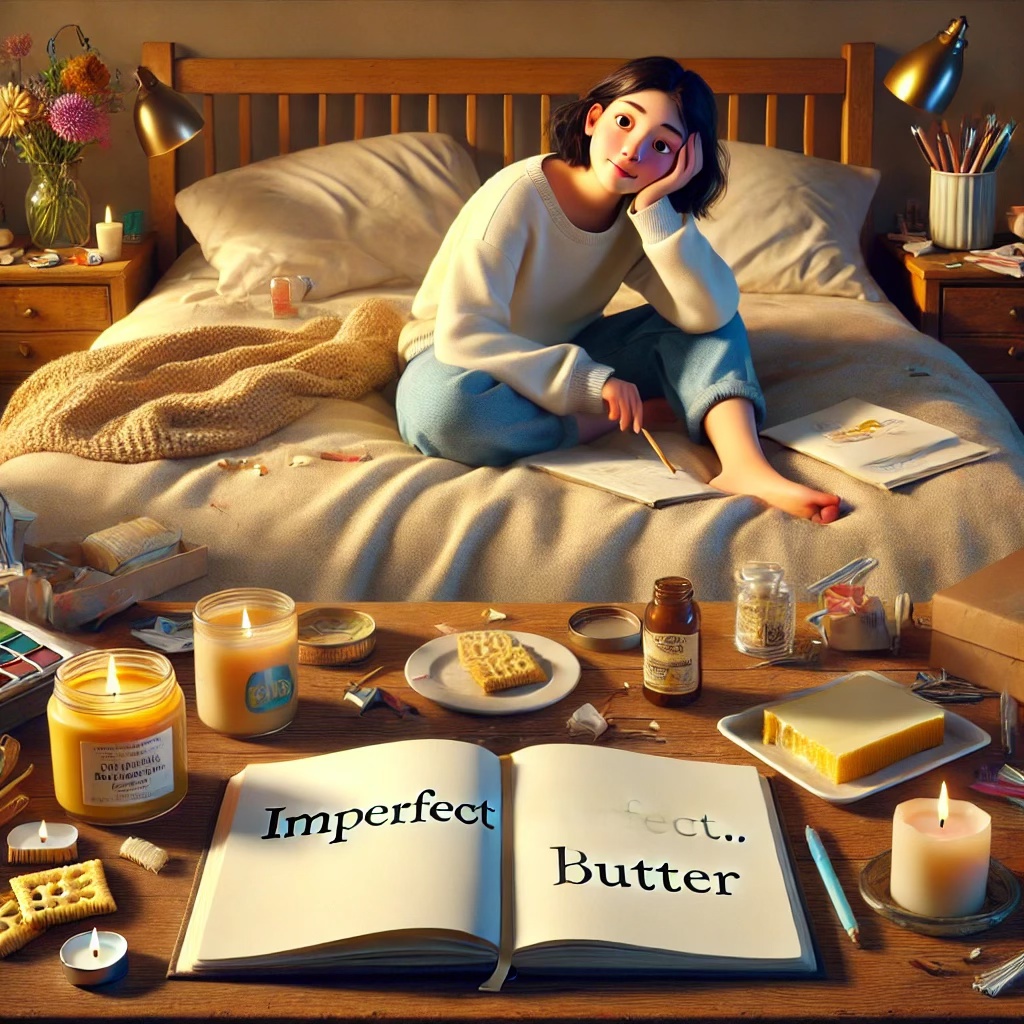
Yours lazily rolling in bed,
Butter






 Dear Friend