• Ladies, Let’s Talk: It’s Time to Put Ourselves on the Priority List

    December 14, 2024
    health, journal, life

    Hey friends,

    This week has been an emotional whirlwind for me. My mom—my rock, my role model—fractured her leg after a seemingly trivial fall. Instead of seeking help immediately, she shrugged it off, saying, “It’s just a little pain. I’ll manage.” Two days later, the fracture had displaced, and surgery became inevitable. Watching her go through this has made me reflect on a bigger issue: why do women—mothers, sisters, daughters, friends—always put everyone else before themselves, even at the cost of their own health?

    As a doctor with 10 years of experience, I’ve seen this story play out countless times. Women juggle careers, families, and homes like superheroes but often skip their own check-ups, ignore warning signs, or shrug off pain as “no big deal.” But here’s the thing: your health isn’t just about you. When you’re healthy, you can be there for your loved ones in a meaningful, sustainable way. So today, I want to talk about simple but powerful steps women can take to prioritize their health at every stage of life.

    1. Don’t Ignore Your Body’s SOS Signals

    My mom’s story is a classic example of why listening to your body is crucial. If something feels off—persistent pain, extreme fatigue, or unusual symptoms—don’t dismiss it. Trust your gut. Your body is trying to tell you something, and the earlier you address it, the better the outcome.

    👉 Pro Tip: Schedule an annual health check-up. Think of it as a self-care ritual. Pap smears, mammograms, and bone density tests might not sound glamorous, but they’re lifesaving.

    2. Move That Body, Any Way You Can

    Exercise doesn’t have to mean joining a fancy gym or running marathons. Even a daily 30-minute walk can do wonders for your heart, bones, and mood. Weight-bearing exercises like walking, dancing, or light strength training are especially important for women as we age because they help prevent osteoporosis.

    👉 Pro Tip: Pair movement with joy. Dance in your kitchen, stretch while binge-watching Netflix, or take the stairs whenever you can.

    3. Feed Yourself Like You Love Yourself

    We pour love into every meal we cook for our families, but when it comes to our own plates, it’s often whatever’s quick and easy—hello, leftovers and coffee. Let’s change that. A balanced diet rich in whole grains, lean protein, healthy fats, and colorful fruits and veggies isn’t just fuel; it’s medicine.

    👉 Pro Tip: Keep it simple. Stock up on nuts, Greek yogurt, pre-washed salad greens, and fruits for quick, nutritious options. And please, hydrate like you mean it—aim for 8 glasses of water daily.

    4. Prioritize Mental Health Like a Boss

    The mental load women carry is often invisible but heavy. Between work deadlines, homework supervision, and remembering birthdays, it’s easy to feel overwhelmed. Mental health is just as important as physical health, and burnout is real.

    👉 Pro Tip: Build micro-moments of joy into your day. Call a friend, take a deep breath, or spend five minutes in silence. If anxiety or sadness lingers, don’t hesitate to seek professional help. Therapy is self-care, not a weakness.

    5. Strengthen Those Bones, Starting Now

    Osteoporosis is sneaky—it often doesn’t show symptoms until something breaks. Women, especially post-menopause, are at higher risk due to hormonal changes. Calcium and Vitamin D are your bone’s best friends.

    👉 Pro Tip: Add dairy, almonds, leafy greens, or fortified foods to your diet, and don’t forget to step into the sunlight for a healthy dose of Vitamin D.

    6. Respect Your Rest

    Sleep is not a luxury; it’s a necessity. Chronic sleep deprivation increases your risk of heart disease, obesity, and even depression. Yet, how many of us sacrifice sleep to catch up on chores or scroll mindlessly through Instagram?

    👉 Pro Tip: Aim for 7–9 hours of sleep every night. A consistent bedtime routine—think chamomile tea, a good book, and no screens—can work wonders.

    7. Ask for Help (And Don’t Feel Guilty About It)

    This is the hardest one for most women. But here’s the truth: you don’t have to do it all, and asking for help doesn’t make you less capable.

    👉 Pro Tip: Delegate household tasks. Teach your kids to pitch in, and let your partner take the lead sometimes. Your well-being matters.

    A Word to the Men in Our Lives

    If you’re reading this and thinking about the amazing women in your life, remind them that their health matters. Encourage them to rest, exercise, and see a doctor when needed. Better yet, join them in these healthy habits—health is a family affair.


    To All the Women Out There:
    You are irreplaceable. Your family needs you, but they need the healthiest, happiest version of you. So stop seeing self-care as selfish; it’s the most generous thing you can do for those you love. My mom’s fall was a wake-up call—not just for her but for me too. Let’s not wait for a crisis to start taking care of ourselves.

    Here’s to putting yourself back on your priority list—you’ve earned it.

    With love and a little tough talk,
    Butter 🩷

    No comments on Ladies, Let’s Talk: It’s Time to Put Ourselves on the Priority List

  • “Dear Santa: A Wishlist from a Grown-Up Who Refuses to Grow Up”

    December 13, 2024
    journal, life

    Dear Santa,

    It’s me, Butter, your favorite adult-child hybrid who still believes in magic and is definitely not above bribing you with cookies. Yes, I’m back with my annual wish list—but this time, it’s different. No ponies (mostly a joke), no “world peace” clichés (though that’d be nice), and absolutely no boring adulting resolutions that make me feel like I should already have my life together.

    No, this year I need the good stuff—the kind of gifts that don’t fit neatly in your sleigh but can turn my life into something truly magical. Think of it as a win-win: I get what I want, and the world gets a better version of me. Ready? Let’s dive in.

    1. Consistency in My Workout Routine (And a Junk Food Lockbox)
      Santa, let’s be real; my relationship with fitness is… complicated. I start strong, channeling my inner gym queen, but by week three, I’m negotiating with myself like, “Walking to the fridge counts as cardio, right?” I need a sprinkle of your North Pole endurance and maybe a magical workout genie whispering in my ear: “Butter, put down the fries and pick up the dumbbells.”

    Also, could you help me keep junk food at arm’s length? Not forever—I’m not asking for miracles—but at least long enough to pretend I’m thriving on green smoothies and kale.

    1. A Patience and Compassion Refill
      Santa, you know I’m a doctor, and some days, my patience wears thinner than your cookie supply on Christmas Eve. I love my job, but let’s just say not every patient understands that WebMD isn’t the ultimate authority on life and death. Could you gift me some extra compassion for those challenging moments and a big ol’ jar of patience? Maybe with a side of Zen vibes to help me keep my cool when life feels like a medical sitcom?
    2. Wealth for Dreams (And Maybe a Few Gadgets)
      Okay, let’s talk money, Santa—not just for me, but for my plans. Sure, I wouldn’t mind a shiny new MacBook or an upgraded iPhone (a girl’s gotta stay tech-savvy), but that’s not the main reason I’m asking. I want to go big on sustainability:

    Ditch plastic for good.
    Install solar panels on my house.
    Launch a community kitchen for people in need.
    Start “green doctor” initiatives because saving the planet and saving lives go hand in hand.
    And, if it’s not asking too much, I’d love to adopt a few girls someday, give them an education, and help them dream as big as I do. Big goals need big bucks, Santa. You understand.

    1. Happiness and Wisdom (The Abstract Stuff)
      Look, I know you’re the “gift” guy, not the “life coach,” but hear me out. I’m asking for happiness—not the fleeting kind that comes with a new pair of shoes, but the deep, lasting joy that makes even tough days feel okay. And wisdom? That’s for those moments when I need to avoid texting my ex or spiraling over things I can’t control. It’s abstract, sure, but if anyone can deliver, it’s you.
    2. Resilience in Bulk (Preferably Chewable)
      Life has its ups and downs, Santa, and I need resilience to weather the storms. Think of it like those gummy vitamins for adults—something I can chew on when life throws me curveballs. Loss, failures, challenges—I want to face them all without losing my spark. A big box of resilience, please. And make it taste like chocolate while you’re at it.
    3. Innovative Ideas for My Creative Ambitions
      Santa, here’s where I really need your magic. I have big dreams of being an author, YouTuber, and podcaster, but let’s face it—there’s enough boring content out there. I want to create things that are useful and entertaining, like:

    A book of hilarious essays called “Prescription: Laughter,” where I share funny stories about medicine and life.
    A YouTube series like “Doctor Tries Normal People Things” where I embarrass myself attempting TikTok trends or DIY projects.
    A podcast called “The Butter Files” where I spill the tea on everything from medical myths to life’s messiest lessons.


    Santa, I need these ideas to hit the sweet spot: not too serious (because nobody needs another anatomy lecture) but not so silly that I end up as a meme. Help me find that magic formula to keep people laughing, learning, and coming back for more.

    Final Notes:
    So, Santa, there you have it. A wish list that’s equal parts ridiculous and meaningful, just like me. I promise to be good (well, better), recycle religiously, and finally stop hitting snooze a million times. And I’ll leave you those fancy gingerbread cookies you secretly love.

    Deal?

    Your favorite wannabe-elf,
    Butter

    P.S. If resilience gummies or magical idea potions don’t exist, I’ll settle for wine. Lots of it.

    No comments on “Dear Santa: A Wishlist from a Grown-Up Who Refuses to Grow Up”

  • The Fine Line Between Risk and Recklessness: A Cautionary Tale

    December 12, 2024
    finance, journal, life

    Have you ever had a front-row seat to someone else’s life unraveling? I have, and let me tell you, it’s not a spectacle anyone wants to witness. A dear friend of mine, someone with the kindest heart and grandest dreams, recently lost everything in a high-stakes real estate gamble. It’s the kind of story you think only happens in movies—except this one didn’t have a happy ending.

    As I sit here, swirling questions around in my mind, I’m gripped by one in particular: Why do we sometimes gamble it all when the stakes are so high? This isn’t just about him or real estate; it’s about how we weigh risks, make choices, and sometimes blur the line between ambition and recklessness.

    What Makes Us Risk It All?

    Humans are hardwired to take risks—it’s how we’ve survived and evolved. But not all risks are created equal. Some lead to innovation and progress; others can wreck lives. What separates the two?

    1. The Psychology of Risk:
      Risk, by definition, is about uncertainty. There’s a possibility of loss, but also a chance of reward. However, the human brain isn’t always rational. Our emotions—fear, greed, hope—tend to drive our decisions, sometimes pushing us into reckless territory.
    2. The Influence of Stories:
      We love success stories, don’t we? Stories of people who bet it all and came out on top. My friend was inspired by a tale of someone who flipped a property and became a millionaire overnight. But here’s the thing: for every success story, there are dozens of untold failures.
    3. Overestimating Knowledge:
      There’s a term for this: illusory superiority. Many of us believe we know more than we actually do. My friend, for example, dabbled in real estate but didn’t have the expertise to recognize a bad deal. Yet he trusted his gut, and his gut betrayed him.

    Risk vs. Recklessness: How Do We Tell the Difference?

    Risk is about taking a calculated chance. Recklessness is about diving in without a plan. Imagine two people standing at the edge of a cliff:

    • Risk: One checks the wind, ensures their parachute is secure, and studies the terrain before jumping.
    • Recklessness: The other leaps without even knowing if there’s water below.

    Here’s the kicker: both might succeed. But the reckless one? They’re counting on luck, not logic.

    Real-Life Lessons: Stories That Teach

    1. The Real Estate Dream That Turned Into a Nightmare

    My friend’s story is a tough one. He invested all his savings—and more—into a real estate project that seemed too good to be true. It was pitched as a sure thing: “Minimal risk, maximum reward!” But red flags were there:

    • The deal was based on speculative land prices.
    • It required borrowing more than he could comfortably repay.
    • He didn’t diversify—his entire fortune was tied to this one project.

    When the market turned, so did his fortunes. It’s a painful reminder of the basics: if it seems too good to be true, it probably is.

    2. The Stock Market Crash of 2008

    Do you remember the financial crisis of 2008? Millions of people lost their homes, jobs, and savings because of risky financial products and a bubble that eventually burst. The lesson here? Understanding what you’re investing in matters. Many people were buying homes or taking loans they couldn’t afford, often lured by promises of ever-increasing property values.

    3. The Wisdom of Warren Buffett

    On the other side of the spectrum is Warren Buffett, one of the world’s most successful investors. Buffett doesn’t avoid risk—he embraces it—but only after doing his homework. His strategy is simple:

    • Invest in what you understand.
    • Leave a margin of safety.
    • Diversify to reduce exposure to any single failure.

    The Common-Sense Checklist: Before You Risk It All

    Whether it’s money, a career move, or a personal gamble, here are some simple questions to ask:

    1. Do I Understand This Inside and Out?
      If you can’t explain the opportunity clearly to a friend over coffee, you might not understand it well enough.
    2. What’s the Worst That Could Happen?
      Imagine the worst-case scenario. Could you handle it emotionally, financially, or otherwise? If the answer is no, think again.
    3. Am I Diversified?
      Don’t put all your eggs in one basket. If one venture fails, will you have a safety net?
    4. Am I Being Influenced by Fear or Greed?
      Take a step back and evaluate your emotions. Fear of missing out (FOMO) or the allure of quick riches can cloud judgment.
    5. Have I Asked for Advice?
      Talk to someone who knows more than you do. A financial advisor, a mentor, or even a skeptical friend can offer valuable perspective.

    Reflecting on My Friend’s Journey

    Seeing my friend struggle has been a harsh reminder of life’s fragility. But it’s also taught me the importance of empathy. We all make mistakes—some financial, some personal. What matters is how we recover and what we learn.

    If there’s one takeaway from all this, it’s that risk is necessary for growth, but it must be tempered with wisdom. The best risks are those that leave room for error, that acknowledge the unknown, and that don’t gamble more than we can afford to lose.

    So, the next time you’re faced with a big decision, take a moment. Breathe. Think. And remember: life isn’t about avoiding risk, but about embracing it with eyes wide open.

    Here’s to making smarter choices and supporting each other when things go wrong. Because, let’s face it, none of us can do this alone. 🖤

    No comments on The Fine Line Between Risk and Recklessness: A Cautionary Tale

  • What I’ll Take from My MBA Finals Into Real Life (Besides Stress Dreams)

    December 11, 2024
    Uncategorized

    Let me tell you, preparing for MBA finals feels like surviving a high-stakes reality show. Imagine juggling case studies, financial statements, and marketing strategies while a tiny voice in your head screams, “WHY DID I SIGN UP FOR THIS?” But as I crawl toward the finish line, I’ve realized something incredible: MBA finals aren’t just academic torture—they’re a crash course in real-life skills I’ll actually use.

    Here’s what I’m taking from this wild ride into the “real world,” sprinkled with just the right amount of humor (and caffeine).


    1. The 80/20 Rule (Pareto Principle): Prioritize Like a Pro

    During finals, I didn’t have time to learn everything in those mile-long reading lists. So, I channeled the Pareto Principle: focus on the 20% of concepts that will have the most impact. For example, in marketing, I didn’t memorize every ad campaign in history; I studied the big ones that revolutionized the game (hello, Apple’s “Think Different”).

    Real-life application:
    This is the secret sauce for work and life. Whether it’s streamlining a marketing campaign or deciding which chores are actually urgent, the 80/20 rule helps me focus on the stuff that matters most—and let the rest go. (Translation: vacuuming is 80% optional.)


    2. Financial Statements: Understanding the Story Behind the Numbers

    Let me tell you, deciphering financial statements felt like learning a new language. Balance sheets, income statements, cash flow—at first, it was all Greek to me. But by finals, I realized these aren’t just numbers; they tell the story of a company’s health, strengths, and weaknesses.

    Real-life application:
    Whether you’re managing your personal budget or running a side hustle, understanding financial statements is like having a superpower. Now, I can read between the lines and figure out if I’m on track to save for a vacation—or just buying too many lattes.


    3. Marketing Is More Than Ads: It’s About Connection

    One of my favorite finals was all about marketing strategies. Here’s the kicker: marketing isn’t just about selling—it’s about storytelling, psychology, and creating a genuine connection with people. Understanding your audience (their needs, wants, and quirks) is the secret sauce to success.

    Real-life application:
    Whether I’m writing a blog post, pitching an idea, or simply trying to convince my friends to choose sushi over burgers, I now think like a marketer. What’s the value? What’s the hook? And how can I make people say, “Yes, Butter, you’re absolutely right”?


    4. Time Value of Money: Don’t Waste It

    “Time is money” is more than a saying—it’s an MBA mantra. Every hour I spent reviewing marketing case studies or practicing financial ratios was an investment in my future. (Yes, even the late-night study sessions fueled by questionable energy drinks.)

    Real-life application:
    Now, I evaluate every opportunity with this lens. Is this worth my time and effort? Will it pay off later? Whether I’m deciding between binge-watching a show or brainstorming blog ideas, the time value of money helps me make smarter choices. (Okay, sometimes Netflix still wins.)


    5. SWOT Analysis: Know Your Strengths and Weaknesses

    Every MBA student has done a SWOT analysis (Strengths, Weaknesses, Opportunities, Threats) for a hypothetical company. During finals, I accidentally did one on myself:

    • Strengths: Writing essays that sound smarter than I feel.
    • Weaknesses: My eternal struggle with spreadsheets.
    • Opportunities: Applying all this knowledge to real-life challenges.
    • Threats: My cat’s ability to turn my study notes into confetti.

    Real-life application:
    Now, I use SWOT as a self-check-in tool. It’s perfect for career planning, big decisions, or even personal growth. Should I start a new project? Take on a risk? Or just take a nap? SWOT helps me weigh my options like a boss.


    6. Group Projects: Collaboration, Even When It’s Hard

    Group projects during finals were… a lot. Think late-night Zoom calls, endless debates, and the occasional teammate who conveniently disappeared (you know who you are). But here’s what I learned: when everyone plays to their strengths and communicates openly, magic happens.

    Real-life application:
    Whether it’s a work team or a group of friends planning a vacation, collaboration is key. I’ve learned to embrace different perspectives, speak up when needed, and occasionally bribe people with snacks to get things done.


    7. Resilience: Keep Going, Even When It’s Hard

    MBA finals taught me that resilience isn’t about being fearless—it’s about showing up, even when you’re overwhelmed. I had moments where I thought I couldn’t handle another financial analysis, but guess what? I did.

    Real-life application:
    Now, when life gets tough, I remind myself that if I survived an MBA finance exam, I can survive anything. Well, maybe not karaoke night—some challenges are too much even for me.


    8. The Big Picture: Why It All Matters

    Finally, the most valuable lesson: seeing the big picture. Finals weren’t just about getting good grades; they were about applying knowledge to solve problems, create value, and think strategically.

    Real-life application:
    Whether I’m planning my career, writing a blog post, or figuring out how to manage my time, I now zoom out and ask, “What’s the endgame here?” It’s amazing how much clearer things become when you remember your why.


    Wrapping It All Up

    MBA finals weren’t just academic hurdles—they were a crash course in life. From understanding financial statements to thinking like a marketer, these lessons will stick with me far beyond the classroom. Sure, I’ll still have stress dreams about forgetting my calculator, but hey, that’s part of the charm.

    Here’s to taking these lessons and applying them to whatever comes next. And if all else fails, at least I can wow people with a SWOT analysis of my favorite pizza toppings.

    XOXO,
    Butter

    No comments on What I’ll Take from My MBA Finals Into Real Life (Besides Stress Dreams)

  • Butter’s 2025 Reading List: Books to Finally Get My Life Together (Or At Least Try)

    December 10, 2024
    books, journal, life

    Hi friends! It’s your girl Butter, cozied up on the couch, wearing mismatched socks, and plotting how I’m going to become the most fabulous, enlightened version of myself in 2025. (Spoiler alert: there will be snacks.)

    So, here’s the tea: I’ve been procrastinating everything. My dreams? Tucked under a pile of “maybe tomorrow” Post-its. My big plans? Gathering dust next to my expired gym membership. But next year? Oh, honey, next year is THE year. And to make it happen, I’ve put together a list of books that will (hopefully) turn me into a YouTube-creating, money-savvy, zen-master genius.

    Let me walk you through my 12-book master plan, full of self-deprecating humor and wild aspirations.


    1. Someday Is Today by Matthew Dicks

    Why I’m Reading It:
    Okay, here’s the embarrassing truth: I’ve been telling people I’m going to start a YouTube channel since 2018. It’s 2024, and I have… zero videos, zero subscribers, and a growing sense of shame. Enter this book, which promises to help procrastinators like me stop waiting for “someday” and start doing today. I’m hoping it gives me the kick in the pants I need to finally hit “record” instead of just yelling, “I’d be so good at this!” at my mirror.


    2. The Art and Business of Online Writing by Nicolas Cole

    Why I’m Reading It:
    I write a blog (you’re reading it right now – hi!), but I know I can level up my writing game. This book promises to teach me how to grab people’s attention, grow my audience, and maybe even make some $$$ doing what I love. If 2025 is the year I finally write something that goes viral, you can bet I’ll be crediting Nicolas Cole in the thank-you speech I deliver to my cat.


    3. Sapiens by Yuval Noah Harari

    Why I’m Reading It:
    Because everyone who reads this book instantly becomes 78% smarter, or so I’ve heard. It’s all about the history of humanity – how we got here, why we’re such a hot mess, and what might be next. I’m hoping it gives me some deep existential insights… or at least a solid conversation starter for awkward dinner parties.


    4. Beyond Wealth by Alexander Green

    Why I’m Reading It:
    Money is great and all, but you know what’s better? A life that feels meaningful. This book digs into what it really means to be “rich” – beyond just bank accounts and stock portfolios. I’m hoping it teaches me how to enjoy the little things, like sunsets, laughter, and finding $5 in my coat pocket.


    5. The Pathless Path by Paul Millerd

    Why I’m Reading It:
    The “normal” life path – school, job, retire – feels so uninspired to me. This book explores the idea of carving your own path, even if it doesn’t make sense to everyone else. As someone who’s always dreamed of being a writer-vlogger-chef-entrepreneur-butterfly (don’t ask), I think this one might just be my new Bible.


    6. The Untethered Soul by Michael A. Singer

    Why I’m Reading It:
    Y’all, my brain never shuts up. It’s like having a roommate who sings karaoke at 2 a.m. and never does the dishes. This book is supposed to help me quiet the mental chaos and find inner peace. Honestly, if it works, I’ll probably buy a copy for everyone I know. (Yes, even you.)


    7. The 3 Alarms by Eric Partaker

    Why I’m Reading It:
    Apparently, this book will help me get my act together in three big areas: health, wealth, and relationships. Plus, it involves setting actual alarms on your phone to remind you of your priorities. If this means my phone can now yell “Drink water!” or “Stop doomscrolling!” at me, I’m all in.


    8. Scorecard Marketing by Casey Graham

    Why I’m Reading It:
    As a blogger who is also secretly plotting world domination, I need to step up my marketing game. This book promises to help me measure success without losing the human touch. If I suddenly start dropping clever marketing phrases into my posts, just know it’s all part of the plan.


    9. The Intelligent Investor by Benjamin Graham

    Why I’m Reading It:
    I want to learn how to invest without feeling like I’m gambling my grocery budget. This classic book is basically the Rosetta Stone of investing, and I’m hoping it transforms me into a savvy financial wizard. Move over, Warren Buffett – Butter’s coming for the portfolio game.


    10. The Psychology of Money by Morgan Housel

    Why I’m Reading It:
    Money makes us all a little crazy, right? This book digs into why we make the money decisions we do and how to be a little smarter (and less emotional) about it. I’m hoping it helps me finally stop buying random gadgets off Instagram ads. (No, I did NOT need that avocado slicer shaped like a unicorn.)


    11. If You’re So Smart, Why Aren’t You Happy? by Raj Raghunathan

    Why I’m Reading It:
    Success doesn’t always equal happiness, and I’m tired of chasing the wrong things. This book promises to explore why even “smart” people feel unfulfilled – and how to flip the script. Honestly, I just want to feel like the main character in my own life again.


    12. The Future of Money by Eswar S. Prasad

    Why I’m Reading It:
    Crypto. Fintech. Digital currencies. It’s like the Wild West out there, and I want to understand what’s happening before I get left behind. Plus, this book will make me sound super smart when I casually drop terms like “blockchain” into conversations.


    Wrapping It All Up

    So there you have it – my 2025 reading list, full of books that will (hopefully) make me a smarter, calmer, more financially-savvy version of myself. Will I read them all? Maybe. Will I procrastinate by reorganizing my bookshelves for the 57th time? Probably.

    If you’ve read any of these or have a life-changing book I need to add to my list, let me know in the comments. Let’s conquer 2025, one hilarious self-improvement moment at a time!

    XOXO,
    Butter

    No comments on Butter’s 2025 Reading List: Books to Finally Get My Life Together (Or At Least Try)

  • “Leave a Spark, Not a Statue: Butter’s Insights on Immortality”

    December 9, 2024
    journal, life

    Dear Friend,

    So, here I am, your Butter, having one of those existential days where I’m sitting around thinking: What if no one remembers me after I’m gone? I mean, sure, my soul’s probably going to some spiritual afterparty, but what about Butter, the human? The giggling, slightly overthinking, occasionally profound me? I want to live forever! Not like a creepy vampire, but as a memory, a thought, a legacy.

    I started brainstorming, and let me tell you, my ideas got wild:

    Idea #1: A DNA bank. Future scientists could be cloning me while saying, “This is Butter, humanity’s finest creation!”
    Idea #2: A marble statue in a fortress. Imagine a 10-foot tall Butter with an inscription that reads, “She churned out greatness.” (Pun intended.)
    Idea #3: A digital avatar. A holographic me chatting with my great-great-great-grandkids about the good ol’ days when humans used Wi-Fi instead of brain implants.
    Idea #4: A pyramid. Because if the Pharaohs could pull it off, why not me? (Spoiler: It’s expensive. Turns out immortality costs more than coffee and croissants.)
    But then I had this epiphany—and it hit me harder than leg day at the gym: You don’t become immortal by building castles or commissioning statues. You become immortal by leaving behind something that lives in people’s minds and hearts.

    Take Lord Krishna, for example. No one’s worshipping his DNA, but his wisdom in the Bhagavad Gita? Timeless. Or Lord Ram, who gave us Raj Dharma—the ultimate guide to leadership and righteousness. And Adiyogi, the first yogi, who didn’t just do a headstand but gave us yoga, a gift that still makes us flexible and fabulous.

    Now let’s talk about more recent legends:

    Marie Curie: She wasn’t building marble fortresses; she was discovering radium and polonium while changing the face of science. Her brilliance has a permanent home in textbooks and our hearts.
    Mahatma Gandhi: He didn’t need a statue (though there are plenty). His philosophy of non-violence? It changed the world.
    Steve Jobs: Did he leave a pyramid? No. But look at your phone—it’s basically his legacy in your pocket.
    Jane Goodall: She’s alive and kicking, but her work with chimpanzees and conservation? That’s going to echo in forests forever.


    These people didn’t chase immortality; they chased meaning. Their ideas were like seeds that grew into forests, sheltering and inspiring generation after generation.

    So I asked myself: Butter, what can you leave behind?
    The answer isn’t marble or tech clones. It’s an idea, a thought, or even just kindness that inspires someone else to do something wonderful. Immortality isn’t about being remembered for existing—it’s about being remembered for giving.

    I don’t know exactly what my gift to the world will be yet, but I’ve decided to start small. Maybe it’s this blog. Maybe it’s making someone laugh on a tough day. Maybe it’s something bigger I haven’t dreamed up yet.

    But one thing’s for sure: I don’t want to be a statue collecting dust. I want to be a spark, a ripple, a little Butter on the bread of humanity’s future. (Okay, that got cheesy, but you get me.)

    Here’s to dreaming big, doing good, and leaving a legacy of love and laughter. Because that’s how Butter rolls. 🧈

    Yours (forever, hopefully),
    Butter

    No comments on “Leave a Spark, Not a Statue: Butter’s Insights on Immortality”

  • “Bad Habits, Good Stories: When Imperfect Choices Lead to Surprising Perks”

    December 7, 2024
    friendship, journal, life

    Dear Friend,

    Do you ever meet an old friend after nearly a decade and realize how much of your life has happened while you weren’t looking? That’s what happened when I met Dr. Akash yesterday. We used to pull all-nighters in the hospital, saving lives, running on caffeine and sheer willpower. Nine years later, there we were, face-to-face, with just as much excitement and anxiety as an awkward high school reunion.

    After the initial “Oh my God, how have you been?!” and the mandatory life update exchange, Akash settled into a slightly gloomy tone. “I fight with time every day,” he said, staring at his coffee like it owed him an apology. He went on to describe how his life as a busy intensivist had cost him his hobbies, his friends, and even a couple of romantic prospects. Basically, time management was his arch-nemesis.

    I could see he was upset, so I said, “You know, if you hadn’t made that terrible choice of working overtime and freelancing in other hospitals, we’d have never met. No bad choices, no me. See? Not all bad habits are entirely bad.” Akash gave me one of those slow, thoughtful smiles and said, “Well, Butter, you are definitely the best consequence of my bad habit.”

    Flattery gets you everywhere with me, obviously.

    We spent the next hour sharing our life rollercoaster stories, and that’s when it hit me: do all bad habits come with good consequences? Like, remember my friend Shweta from college? She had this hilarious knack for losing everything—keys, wallets, IDs. We used to tease her that she’d someday lose herself. Once, she left her sketchbook in a café, and a random customer found it. He fell in love with her art, tracked her down, and offered her a mural commission that kick-started her career as an artist. Her habit of losing things was undeniably frustrating, but hey, it accidentally unlocked her future.

    Then there was Mrs. Desai, our childhood neighbor, who was infamous for peeking over the fence and keeping tabs on everyone’s business. We found it annoying—until the night she spotted someone trying to climb into our backyard. Her nosiness may have saved us from a burglary. After that, we started jokingly calling her “The Watchtower,” and honestly, I think she wore the title proudly.

    Even in my own life, my impulsive spending habits have led to some unexpectedly lovely outcomes. A few years ago, I bought an outrageously expensive red dress on a whim. I felt guilty about it for weeks until I wore it to a friend’s wedding. That night, I met a group of people who became some of my closest friends. Would they have liked me if I’d shown up in my usual jeans? Probably. But the red dress didn’t hurt.

    And my cousin Sameer? Oh, he’s another gem. He could never wake up on time. His alarm clock was more like background music to his dreams. One day, he missed his bus and ended up hitching a ride with a colleague. That carpool ride turned into a deep conversation, which eventually turned into a successful business partnership. His tardiness, as frustrating as it was, turned out to be the beginning of something amazing.

    Stories like these make me wonder about my own quirks. Take my waking-up-late habit. I hate mornings, and they hate me back, but I have to admit, my best ideas often come from those slow, indulgent moments of lying in bed, staring at the ceiling. This blog wouldn’t exist without them. And then there’s my tendency to go all-in on things I love and ghost the things I don’t. People say it’s unbalanced, but it’s also what makes me decisive. I can’t do halfway—it’s either a passionate yes or a firm no. That’s not a bad trait, is it?

    Of course, some habits don’t seem to have any redeeming qualities. Like my weight struggles. Unlike other quirks, this one doesn’t feel like it’s bringing any hidden blessings. It’s just a problem I have to work on, plain and simple. Smoking, alcohol, overeating—those aren’t bad habits; they’re self-destructive traits. Let’s call a spade a spade.

    But for everything else? I’m starting to think we’re too hard on ourselves. Maybe these “bad habits” aren’t inherently bad. Maybe they’re just outdated strategies—things we needed at one point to survive, adapt, or grow. Like Akash’s overworking habit. It helped him stabilize his family financially, and it brought me into his life. Was it ideal? Probably not. Was it all bad? Definitely not.

    Maybe the key is revisiting these habits every now and then. What worked for Past Me doesn’t always serve Present Me. It’s like upgrading your phone—you’ve got to get rid of old apps to make space for what you really need now. Instead of labeling them as bad habits, maybe we should see them as tools that helped us at some point but need sharpening—or retiring.

    By the end of our chat, Akash seemed a little lighter. I think he’s ready to fight a little less with time. And me? I’m considering waking up early tomorrow. No promises, though.

    Yours lazily rolling in bed,
    Butter

    No comments on “Bad Habits, Good Stories: When Imperfect Choices Lead to Surprising Perks”

  • The Leap of Faith: Should I Take This Business Partnership?

    December 6, 2024
    journal, life

    Hey, dear friend.

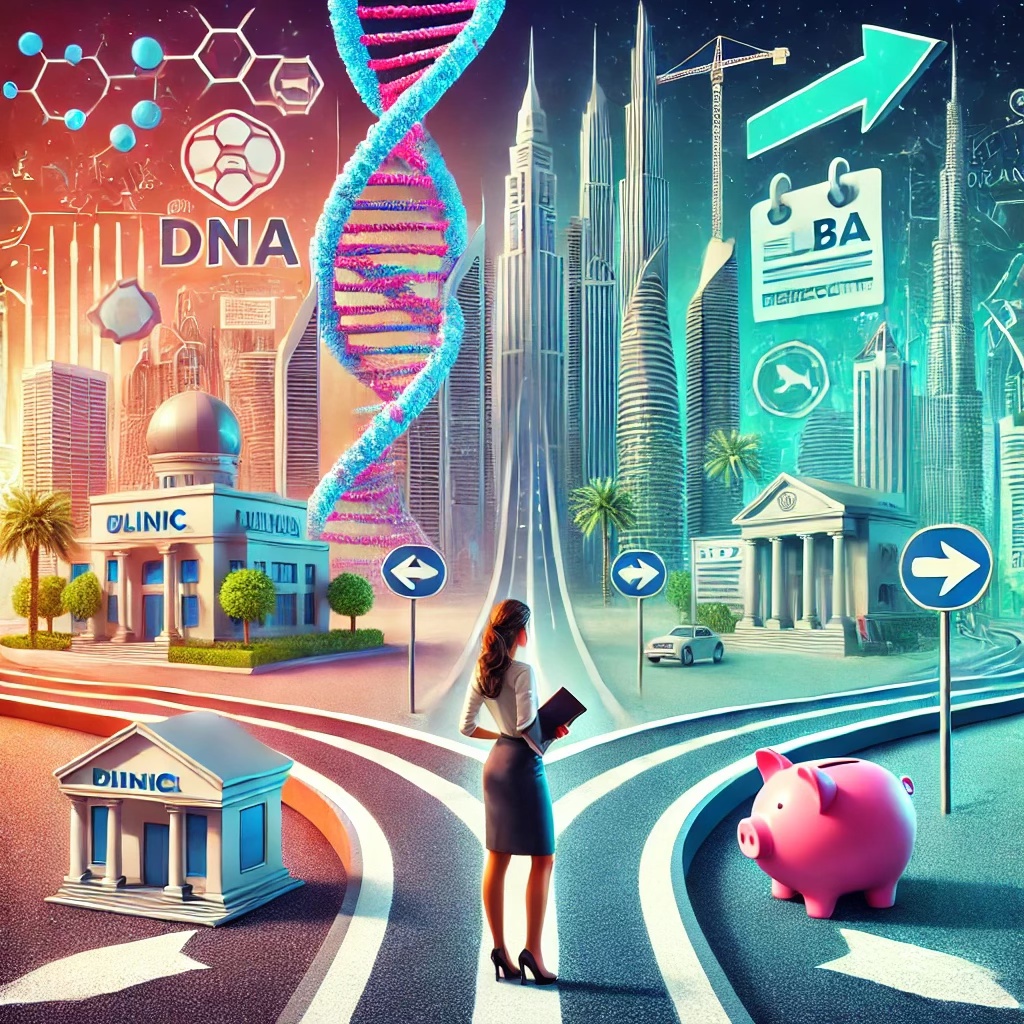
    I need to talk this out with you because my mind is racing. You know how I’ve always dreamed of building something meaningful in healthcare? Well, I’ve been offered a partnership in a clinic here in Dubai. It’s not just any clinic—it’s in Jumeirah, all shiny and prime, offering genetic and precision medicine. Imagine the possibilities!

    But here’s the thing—this isn’t just a dream; it’s my lifetime savings on the line. On top of that, I’ll need to take loans. If it works, it’s the big leagues. If it doesn’t… well, let’s not even go there. So, before I say yes, I’m breaking it down step by step. Can I run this by you?

    The Big Picture: Is This Worth It?
    The field is amazing—genetic and precision medicine. It’s where healthcare is heading. Think about it: treatments tailored to your DNA! It could attract a lot of buzz, especially here in Dubai, where the government is all-in on medical innovation and tourism.

    But marketing… that’s going to be a mountain to climb. This isn’t a clinic you can just advertise on billboards. People need to understand the value of personalized medicine, and that means investing in education and trust-building. Do you think that’s doable?

    Location, Location, Location
    Jumeirah—sounds dreamy, right? It’s where the well-heeled crowd lives and plays, so the potential clientele is right there. But it’s also an expensive area, and competition will be fierce. I need to figure out how we stand out. What do we offer that others don’t?

    The Financial Puzzle
    Okay, here’s where it gets tricky. The investment feels… steep. Like, am-I-paying-for-the-brand-name steep. I’m wondering if I should negotiate or get an independent valuation. What if I’m overpaying for something that doesn’t have the returns I’m imagining?

    And then there’s the revenue. Will this clinic make money from consultations alone? Or are there other streams—like genetic testing partnerships or lab services? I need to map this out.

    Marketing—The Elephant in the Room
    This is what’s keeping me up at night. Marketing. How do you convince people they need precision medicine? It’s not something people Google on a whim. I think digital campaigns targeting a very specific audience might work, and building trust with local doctors for referrals could help. What do you think? Is this too ambitious?

    The Team and the Dream
    Another thing—I need to be sure about the people I’m partnering with. Are they as committed as I am? Do they share the same vision? If the team isn’t strong, this whole thing could fall apart before it even begins.

    What Practical Solutions Can I Try?
    Here’s what my MBA brain suggests: instead of diving in headfirst, I could test the waters. Maybe I negotiate a trial partnership or work in the clinic for six months to understand the cash flows, patient demand, and actual challenges on the ground. This hands-on experience would give me a clear picture without putting all my savings at risk right away.

    Another option could be entering as a consultant or advisor initially, contributing my skills without full financial commitment. During this time, I could validate the revenue model, identify operational inefficiencies, and even build a marketing framework to ensure steady growth.

    Lastly, I could negotiate a phased investment approach—investing smaller amounts in stages, tied to specific milestones like achieving a certain patient base or revenue target. It’s a less risky way to commit while ensuring the business can deliver results.

    What’s My Worst-Case Scenario?
    And then there’s the scary part. What if it flops? Am I prepared to lose my savings and deal with the debt? What’s my exit strategy? But also—what’s the alternative? If I don’t take this chance, will I regret it for the rest of my life?

    You know me. I’m trying to be practical, but my heart’s also in this. It feels like everything I’ve learned and dreamed of is leading to this moment. But am I ready?

    I guess the real question is—do I bet on myself?

    Thanks for listening. It means the world to me.

    Butter 🌼

    No comments on The Leap of Faith: Should I Take This Business Partnership?

  • Mission FIRE: Keep the Butter on the Bread Without Working Till Death.

    December 5, 2024
    journal, life

    Dear Friend,

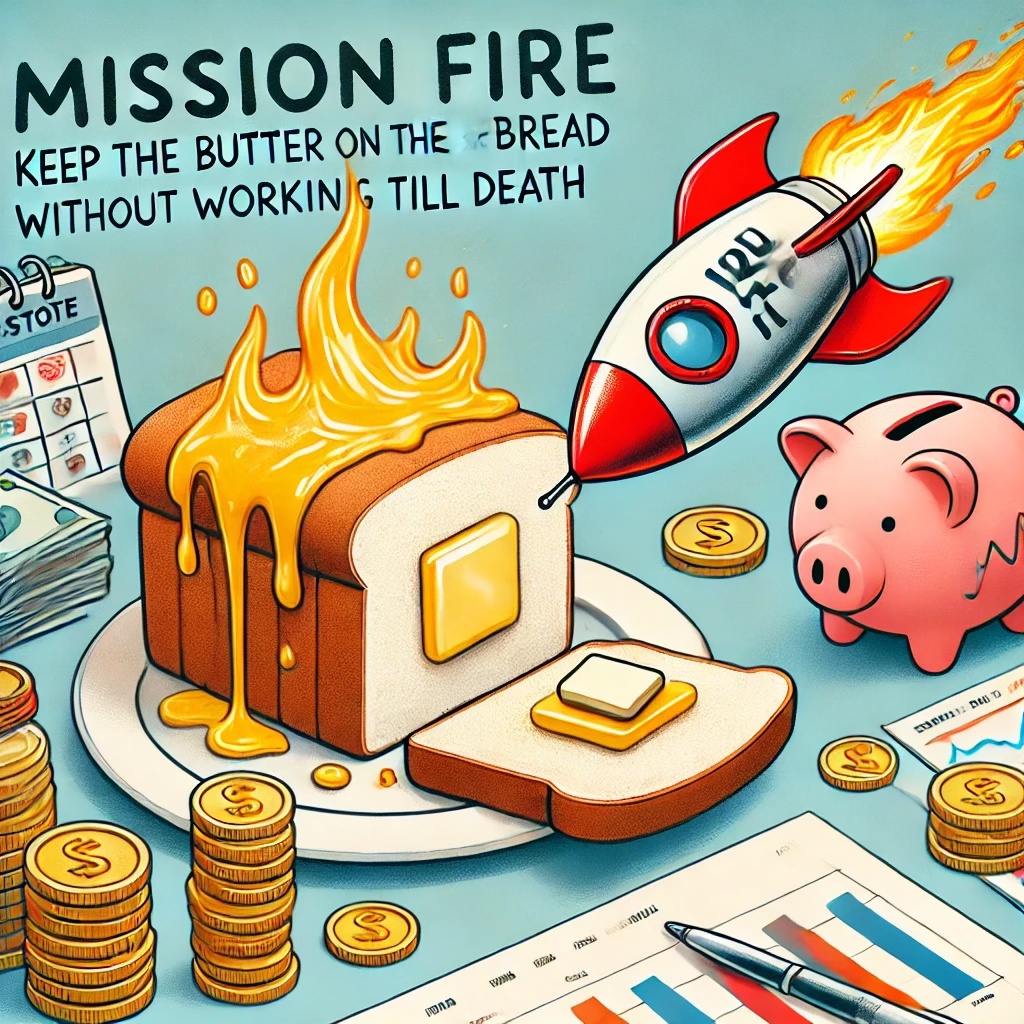
    You know what they say, right? “Money can’t buy happiness.” But let’s be honest—it sure does keep the lights on, pays for overpriced smoothies, and funds that occasional impulse splurge on a scented candle you definitely didn’t need. Hi, I’m Butter, your friendly existential financial thinker. And today, I had a revelation so mind-boggling, it nearly made me cancel my Netflix subscription: my FIRE number is so high, it could hire an assistant just to hold the elevator for it in the Burj Khalifa.

    In case you’re wondering, what’s a FIRE number and why does it sound so intimidating?—let me enlighten you. FIRE stands for Financial Independence, Retire Early. It’s the dream of saving and investing enough money to quit your job and live off your investments while the rest of the world is still hitting snooze at 7 a.m. Sounds dreamy, doesn’t it?

    Well, here’s the tea: after calculating my annual expenses (a modest ₹30,00,000—because sushi isn’t free), factoring in sectoral inflation at a spicy 11% (because the cost of living loves drama), and planning for a lifespan of 100 years (because I fully intend to outlive my enemies), my FIRE number looked less like a goal and more like Elon Musk’s Mars budget.

    I stared at it. It stared back. I felt a bit faint, but also defiant. Because if there’s one thing Butter doesn’t do, it’s crumble under pressure. Instead, I whipped out a journal (unused, naturally—because apparently, I collect those now) and started sketching out a plan.

    Step 1: The Meltdown (Totally Normal)
    For a hot minute, I thought, Forget FIRE, I’ll just work forever like a corporate vampire. But then I remembered: FIRE isn’t about being filthy rich. It’s about freedom—the freedom to paint on Tuesdays, nap guilt-free on Sundays, and never again sit through a meeting that could’ve been an email. That’s when I decided: Butter isn’t giving up. Butter’s going to sizzle her way to financial independence.

    Step 2: The Plan to Not Die Broke
    If you’re staring at your own daunting FIRE number right now, here’s what I’ve decided to do. Feel free to steal these ideas (and maybe credit me when you write your memoir):

    1. Multiple Income Streams (aka, Make That Dough)

    Relying on a single job for income is like eating toast without butter—uninspired and kind of sad. So I’m exploring passive income streams: freelance gigs, selling handmade candles, and maybe even starting a blog (spoiler: you’re reading it). If money doesn’t grow on trees, I’m planting seeds everywhere.

    1. SIPs: The Slow Cooker of Wealth

    Systematic Investment Plans (SIPs) are like financial crockpots. You add a little every month, let compound interest do its magic, and boom—a few years later, you’ve got a piping hot pile of money. It’s boring, but hey, boring builds empires.

    Step 3: Butter’s Fancy Investment Buffet
    For those of us who dream big but have realistic wallets, it’s all about diversification. Here’s what’s on my financial plate:

    ISO: Stock Options from Work

    If your company offers incentive stock options (ISO), take them. They’re like getting shares on a discount, and when the company grows, so does your portfolio. Think of it as a mini lottery ticket for future-you.

    Unlisted Shares: Pre-IPO Excitement

    Unlisted shares are like VIP tickets to a concert before the masses even know the artist. It’s risky, but if the company goes public, you could be riding the profit wave like a financial surfer.

    Global Investments: Butter Goes International

    Why limit yourself to one country? Investing in global index funds like the S&P 500 is like ordering an international buffet—you get a little bit of everything, and it’s deliciously diversified. Plus, if one market stumbles, another might be thriving.

    REITs: Real Estate Without Leaky Faucets

    Real Estate Investment Trusts (REITs) let you invest in property without becoming an impromptu plumber. You just collect dividends and let someone else deal with the messy stuff. It’s real estate, minus the drama.

    Crypto: Butter Dabbles in the Future

    Cryptocurrency is the wild child of finance—exciting, unpredictable, and potentially lucrative. I’m dabbling, but only with money I can afford to lose (aka my “Friday pizza” budget).

    Step 4: The Golden Rules for FIRE
    Here are my commandments for this journey:

    Automate Everything: SIPs, savings, and even my coffee subscription—it’s all on autopilot because future Butter doesn’t need extra stress.


    Learn Before You Burn (Money): I’m diving into financial books like The Intelligent Investor by Benjamin Graham and Rich Dad Poor Dad by Robert Kiyosaki. Knowledge is wealth, my friend.


    Diversify Smartly: From stocks to bonds to global funds, I’m not putting all my eggs in one basket. Even if that basket is lined with gold.


    Step 5: Butter’s Bigger Picture
    FIRE isn’t just about money—it’s about buying back time. It’s about having the freedom to say no to things that drain you and yes to the things that light you up. It’s about sipping chai on a Tuesday morning, starting a passion project, or simply enjoying the quiet peace of not being in a rush.

    Sure, my FIRE number still looks like it belongs in the sci-fi section, but every small step—every SIP, every new income stream, every expense I cut—brings me closer. And if I can do it with my scented-candle addiction and sushi cravings, so can you.

    So here’s to us, my fellow dreamers. Let’s save, invest, and laugh our way to a life rich in every sense of the word.

    Yours in snacks, spreadsheets, and stubborn optimism,
    Butter 🧈

    No comments on Mission FIRE: Keep the Butter on the Bread Without Working Till Death.

  • “From Chaos to Clarity: Butter’s Journey to a Planner That Works”

    December 4, 2024
    journal, life

    Hey there, dear friend. It’s me, Butter. Let me tell you about my whirlwind romance with 2024… and how it ended with me ghosting my pile of planners.

    It all started with high hopes and a shopping spree. I bought so many journals—enough to start my own stationery store. Each one promised to organize my life, help me reflect, track my mood, and basically turn me into a Zen guru. By March, I was drowning in prompts. By June, I quit.

    I realized something: I don’t need a planner that feels like a full-time job. I don’t need thirty pages asking me how I feel about Tuesdays. What I need is simplicity.

    But 2024 wasn’t all bad. My career took off like a dream (yay!), but I also learned some hard truths. Overcommitting? Draining. Flakey people? Frustrating. Love life? Let’s just call it a “learning experience” and move on.

    What I did love? Time with my family and friends. Their laughter is my favorite kind of therapy. I also figured out that I want more creativity in my life. Maybe even a YouTube channel—me, sharing my thoughts, my ideas, my stories. (Imagine the intro: “Hey, Butter here!” Catchy, right?)

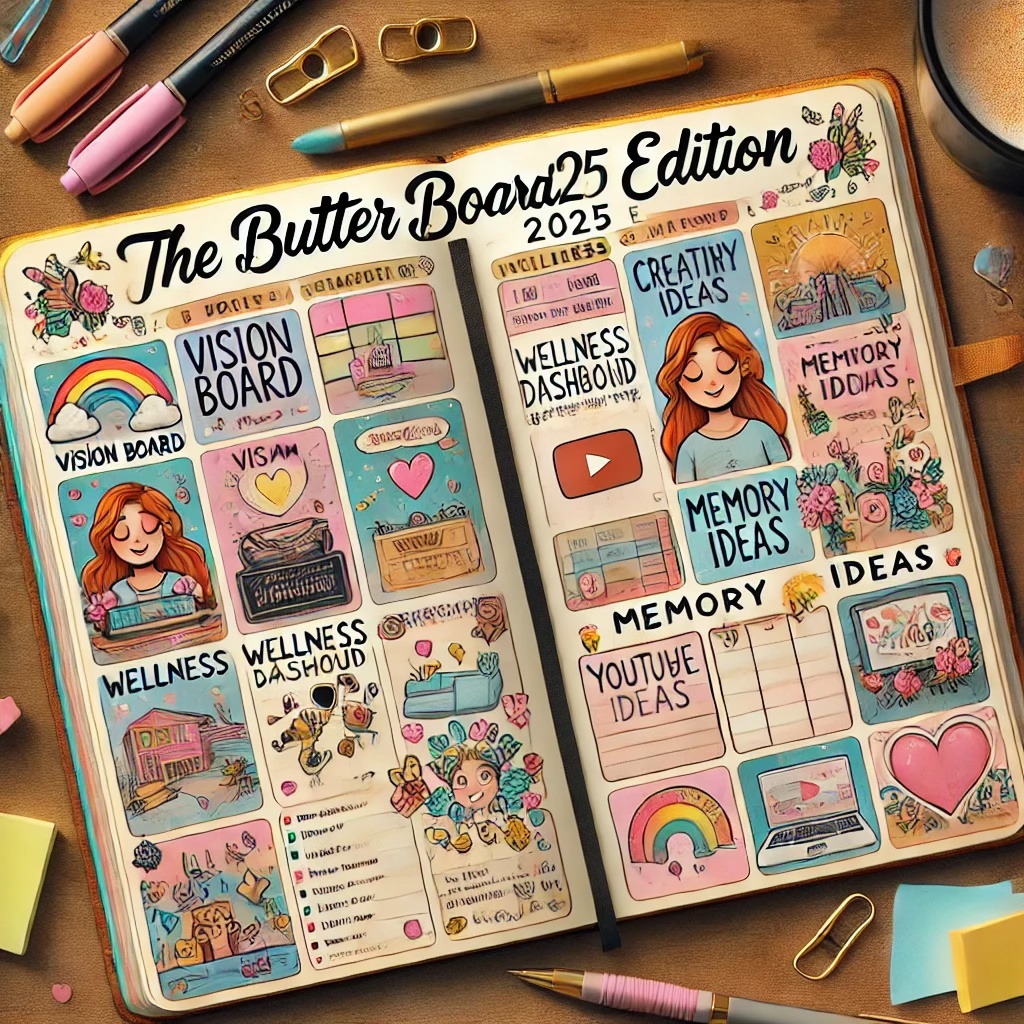
    So, as I say goodbye to my chaotic 2024, I’ve decided to take matters into my own buttery hands and design my own planner for 2025. Ladies and gentlemen, let me introduce:

    The Butter Board: 2025 Edition: It’s everything I need and nothing I don’t. Here’s what’s in it:

    2024 Reflection
    A quick recap because even the messiest years teach us something.
    Goals for 2025
    I’m aiming to be healthier, happier, wiser, and wealthier. The full glow-up package.
    Vision Board
    A space to dream big and pin down what I really want in life.
    Wellness Dashboard
    Mood, exercise, and weight trackers because accountability is queen.
    Weekly Reflection Pages
    A spot to jot down thoughts, celebrate wins, and maybe vent a little.
    Monthly Layouts
    For appointments, budgets, and keeping my life in order without overloading my brain.
    Memory Vault
    A page for every beautiful moment I want to cherish—big or small.
    Creative Corner
    My sandbox for ideas, especially for that YouTube channel I’ve been dreaming about.


    This planner isn’t just a tool; it’s my lifeline to a better year. It’s about keeping life simple, celebrating the good stuff, and learning to let go of what doesn’t serve me.

    2025, I’m coming for you—refreshed, organized, and ready to spread good vibes like butter on hot toast. Let’s make this year amazing.

    PS: Do write about your planner and plans for 2025.

    with love,

    Butter

    No comments on “From Chaos to Clarity: Butter’s Journey to a Planner That Works”

Previous Page
1 … 5 6 7 8
Next Page

Blog at WordPress.com.

Dear Friend

conversations that matter

    • About


Loading Comments...
 

    • Subscribe Subscribed
      • Dear Friend
      • Join 36 other subscribers
      • Already have a WordPress.com account? Log in now.
      • Dear Friend
      • Subscribe Subscribed
      • Sign up
      • Log in
      • Report this content
      • View site in Reader
      • Manage subscriptions
      • Collapse this bar